

Efficient on-site waste management improves operations and profits. Managing waste is a constant problem, from the debris produced by construction projects to the daily trash in crowded office buildings and bustling restaurants.
According to recent research, up to 30% of the materials brought to a construction site eventually end up as waste, and the South African construction sector alone is thought to produce between 5 million and 8 million tonnes of construction debris every year.
Businesses usually have to choose between the modern bulk bag (also called a flexible intermediate bulk container, or FIBC) and the traditional, rigid skip bin when it comes to large container rubbish storage because of their substantial volumes. Costs, logistics, and site safety are just a few of the variables that will influence the choice between the two.
Custom Bulk Bags (CBB) is a reputable manufacturer and supplier of FIBCs in South Africa. We produce 3.5 million bulk bags a year – all of which can safely hold between 500kg and 2000kg each. Our products are used by restaurants, contractors, offices and residential complexes due to their affordability and customisability.
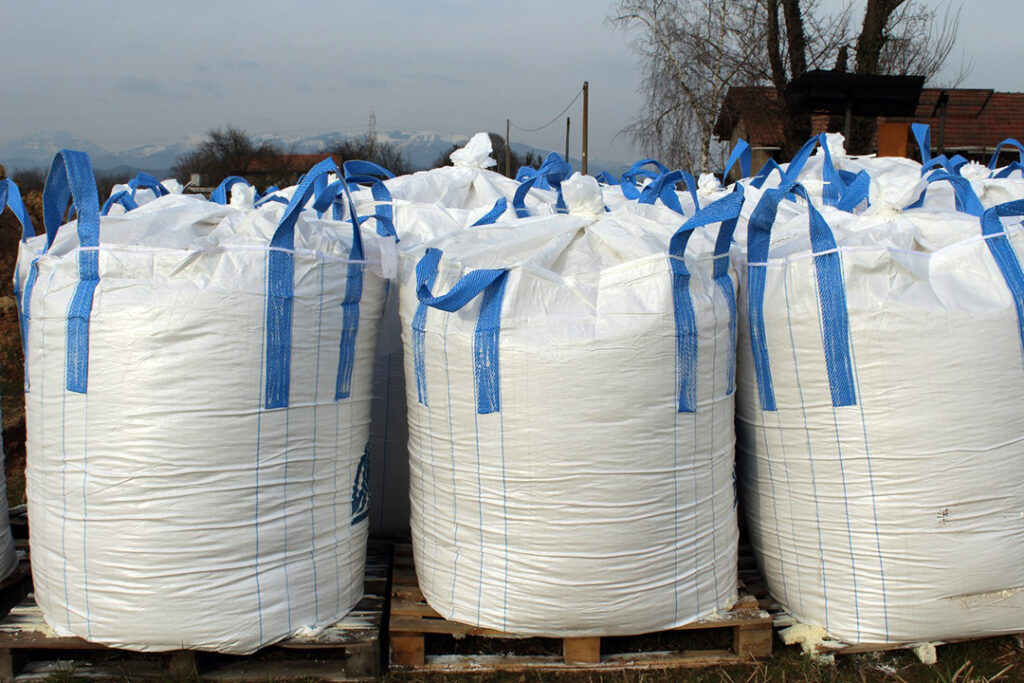
Comparison between bulk bags and skips for waste management
Although bulk bags and skips are both designed to manage large amounts of rubbish and debris, there are clear benefits and drawbacks to each of their basic design types in numerous operational categories.
1. Capacity and volume – Conventional metal skips come in a variety of fixed capacities, ranging from large 12-cubic-meter containers for commercial projects to smaller 2- to 3-cubic-meter models often used for home renovations. For large-scale, high-volume waste, such as the demolition of a building, skips are a great option for their larger capacities.
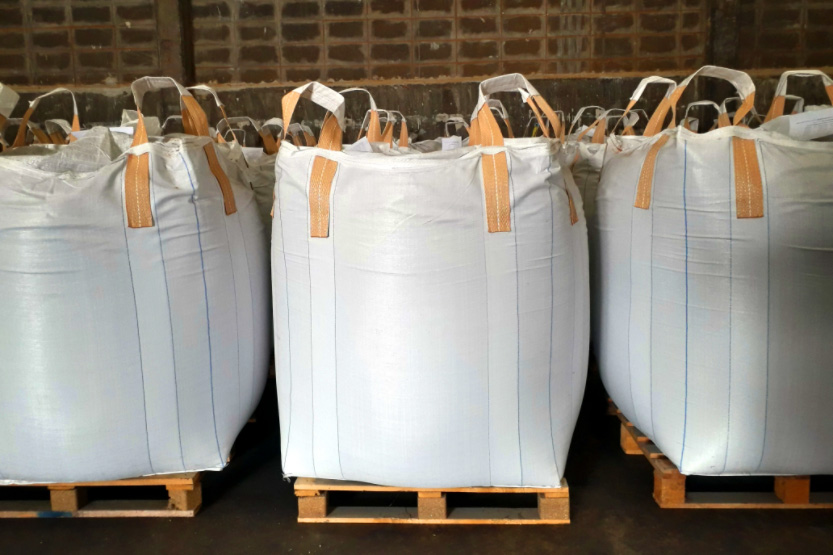
Bulk bags, on the other hand, are usually between a half and two cubic meters. The flexibility of bulk bags allows them to be used individually or in multiples to precisely match smaller or irregular waste streams without having to pay for unused skip capacity. Best of all, FIBCs can be folded flat when not in use, which saves on storage costs and space.
2. Limits on weight and load – The rigid, heavy steel design of skips means they can easily manage dense, heavy waste, such as rubble, bricks, and concrete, with a high degree of confidence. Depending on the size of the skip, it can even hold several tonnes of material.
Despite being lightweight and composed of flexible woven polypropylene, bulk bags are incredibly strong and can securely transport 500 to 2000kg of rubbish. The lifting ability of the bag is the crucial constraint for heavy construction debris, so weight may be a more limiting factor for bags than volume. But for small to medium waste streams, such as at restaurants and offices, bulk bags are a more cost-effective option for lighter weights and loads.
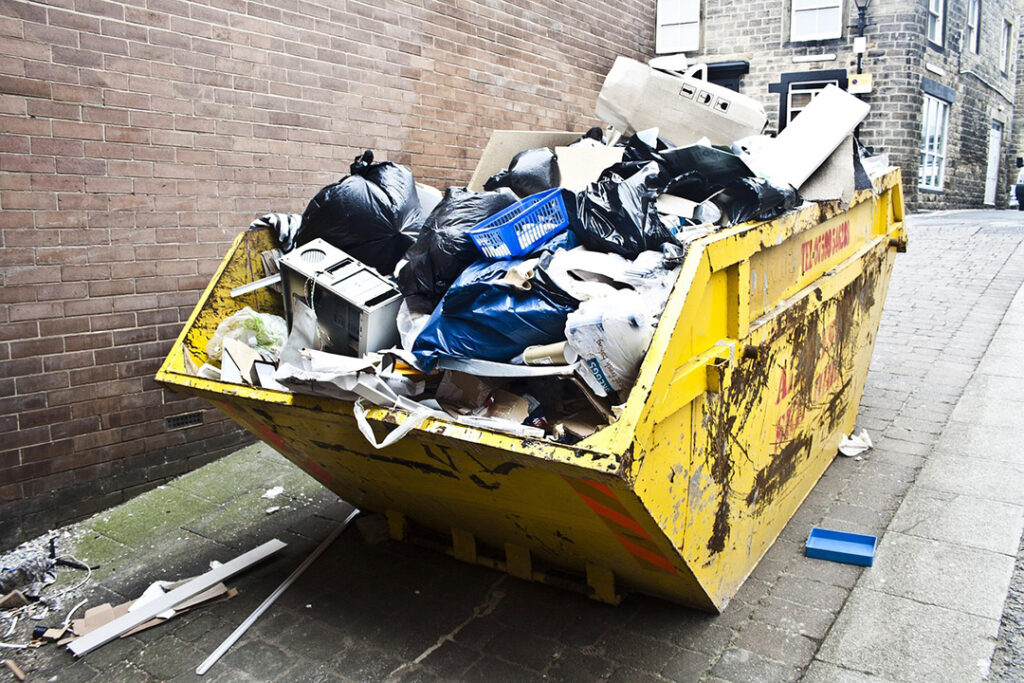
3. Cost and affordability – The cost models are very different for skips and FIBCs. With possible fines for overfilling or exceeding time limits, skips are expensive up front. Typically, they are based on a hire price for a set term (daily, weekly, or monthly) plus the cost of collection and disposal.
In contrast, bulk bags are usually bought as a single item outright (they are not rented from a waste company). Bulk bags are a more affordable and flexible upfront solution for many small to medium operations because they don’t require rental costs and can be filled at the user’s pace, making them ideal for smaller projects or circumstances where filling time is unexpected.
4. Space requirements – Delivering, placing, and operating a metal skip requires a lot of space because it is a permanent and hefty item that takes up the same set footprint on site, whether it is filled or empty. These rigid containers cannot be disassembled or minimised in any way.
Bulk bags are supplied folded flat, requiring almost no storage space until they are needed. This feature is extremely useful in metropolitan South African settings, such as densely populated residential neighbourhoods or crowded business districts, where space is at a premium and a big, empty skip would be an unneeded hindrance.
5. Delivery timelines – Delivery and pickup of skips requires the use of specialised, heavy-duty trucks known as “skip lorries,” which calls for meticulous planning and municipal licenses in order to be placed in public streets or alleys. Delivery lead times may be several days as a result, and pickup needs to be scheduled beforehand.
FIBCs are readily available and may be bought off the shelf and sent right away by courier. Compared to a regular skip, the method is typically more flexible and less restricted by logistics and regulations, even though the filled bag must still be lifted by a forklift or crane truck for the final collection.
Real-world applications for each
The choice between skips and bulk bags comes down to specific needs and the environment. Here are a few examples of real-world use cases:
- Residential or home renovations – Bulk bags are often the most cost-effective option for a standard kitchen strip-out or a little home renovation. Two to three bulk bags are usually sufficient to store the amount of rubbish produced, which is mostly light debris, wooden offcuts, and tiny amounts of rubble. Without a permit, the bags can be placed near the waste’s origin (even in the driveway or garden), providing excellent convenience and affordability given their small size and weight.
- Large-scale demolition and commercial construction sites – The conventional skip is a great option in these situations. An 8m³ or 12m³ skip is necessary due to the extreme volume and density of waste, which includes tonnes of concrete, steel, rebar, and massive debris. A skip typically costs less per cubic meter for heavy, high-volume rubbish, and the fixed, sturdy design of the container is more appropriate for the demanding conditions of a busy building site.
- Restaurants and offices – Bulk bags are a flexible solution for sporadic waste and everyday refuse collection in restaurants and offices. Bulk bags can be used on an as-needed basis, for instance, in an office complex to remove paper waste, plastics and other forms of litter. In restaurants, they are perfect for food waste, packaging and leftovers. An inner liner inside the FIBCs can prevent liquids from seeping out onto the alleyway floor. By using the bags only when a critical mass of waste is achieved, this eliminates the monthly skip hire’s recurring cost and permanent footprint.

Customising your waste management strategy
The choice between skips and bulk bags is a calculated one. While bulk bags rule in settings needing flexibility, cost management, and a solution for smaller, less dense waste streams or locations with restricted access, skips can be a better option in situations requiring high-volume, fixed-term trash disposal for dense materials.
In the end, the bulk bag’s adaptability and space-saving qualities offer a clever, contemporary solution that fits with the lean operational approaches that are becoming more and more popular in South African companies.
Our bulk bags are made from high-quality, heavy-duty woven polypropylene and are intended to be a reliable, secure, and efficient option for recycling, garden waste, construction debris, and general on-site cleanup. To help businesses efficiently and economically manage their on-site waste control procedures, we can customise bags with features like improved UV resistance for outdoor use, heavy-duty fabric for sharp debris, and custom printing for waste type identification and branding.
We can help you improve your on-site waste control through affordable, flexible and strong bulk bags. Please contact us today for more information about our FIBCs or to get a free consultation.
___
Custom Bulk Bags is a major South African manufacturer of woven polypropylene bags for various industries, including mining, chemicals and agriculture. We are a Level 2 B-BBEE supplier that falls under the ownership structure of Deneb Investments Limited. For more information on our products, contact sales@custombulkbags.co.za.
