
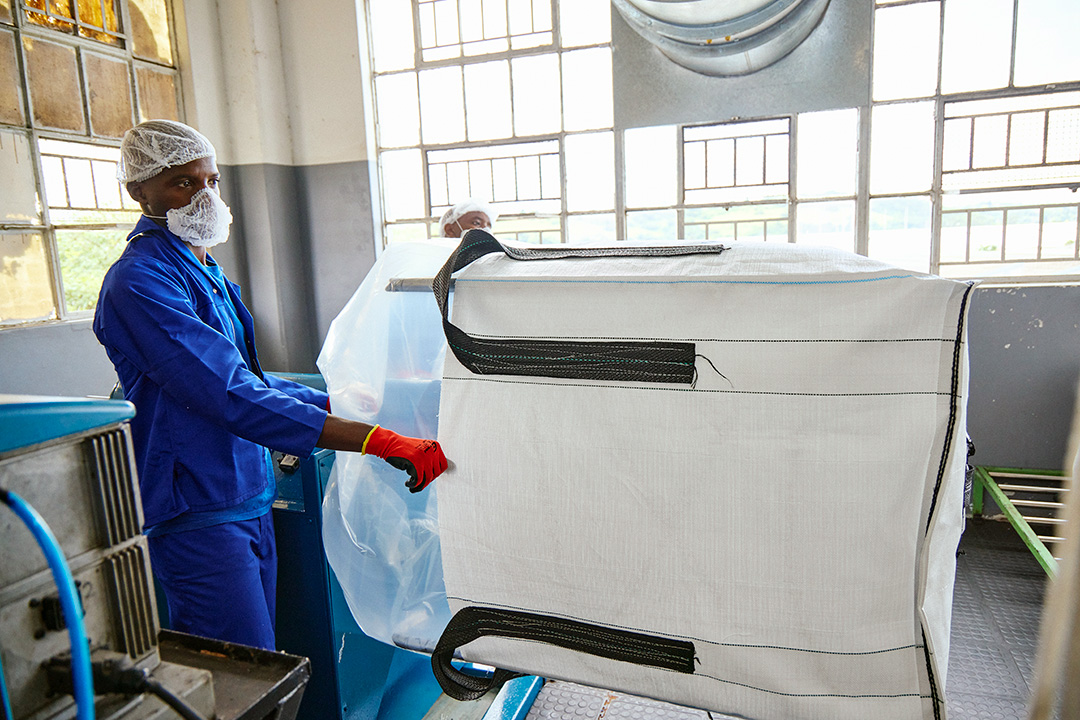
Precision cannot be understated in industrial logistics. The woven polypropylene (PP) fabric of a typical bulk bag is strong but not quite right for certain applications. Businesses use inner liners to protect delicate goods and fine powders from moisture, oxygen, or sifting. However, the effectiveness of an inner liner depends on proper installation.
A one-ton bulk bag can quickly go from being a streamlined asset to a logistical and safety hazard when an inner liner is misplaced. Misalignment can cause several operational challenges and make bulk bags less effective, so be sure to verify that liners are placed correctly before filling bulk bags with any substance.
Custom Bulk Bags (CBB) is a leading local manufacturer and supplier of customised bulk bags in South Africa. We produce 3.5 million bulk bags annually for various industries across the region. We extrude and weave our own premium polypropylene fabric and manufacture our inner liners in-house.
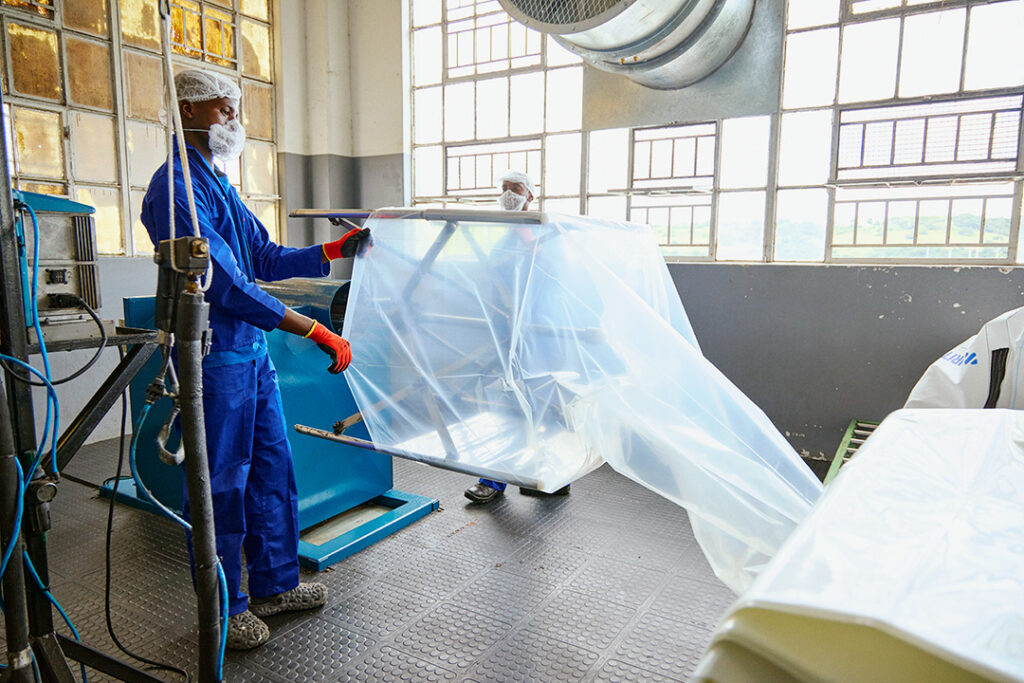
The role of inner liners in bulk bags
An inner liner is an additional layer that is placed inside the woven bulk bag and is usually composed of high-density polyethylene (HDPE), linear low-density polyethylene (LLDPE), or speciality foils. To keep seeds from fermenting, powders from solidifying or sugar from clumping, moisture protection is probably the most important function of an inner liner.
Foil liners are especially effective as oxygen and light barriers. These become essential in the chemical industry to keep reactive powders from oxidising. Pharmaceutical powders or fine minerals also won’t sift through the minute gaps in the woven fabric thanks to inner liners.
The risks of liner misalignment
When the liner is twisted, bunched, or seated incorrectly inside the outer bag during production or filling, it can have several negative consequences. The internal physics of the load changes significantly, even if it may appear good from the outside.
1. Impaired stability and load bearing – Weight distribution over the base and seams of a bulk bag is designed to be uniform. The material fills the bag unevenly when a liner is “bunched” or misplaced on one side. The centre of gravity can shift as a result.
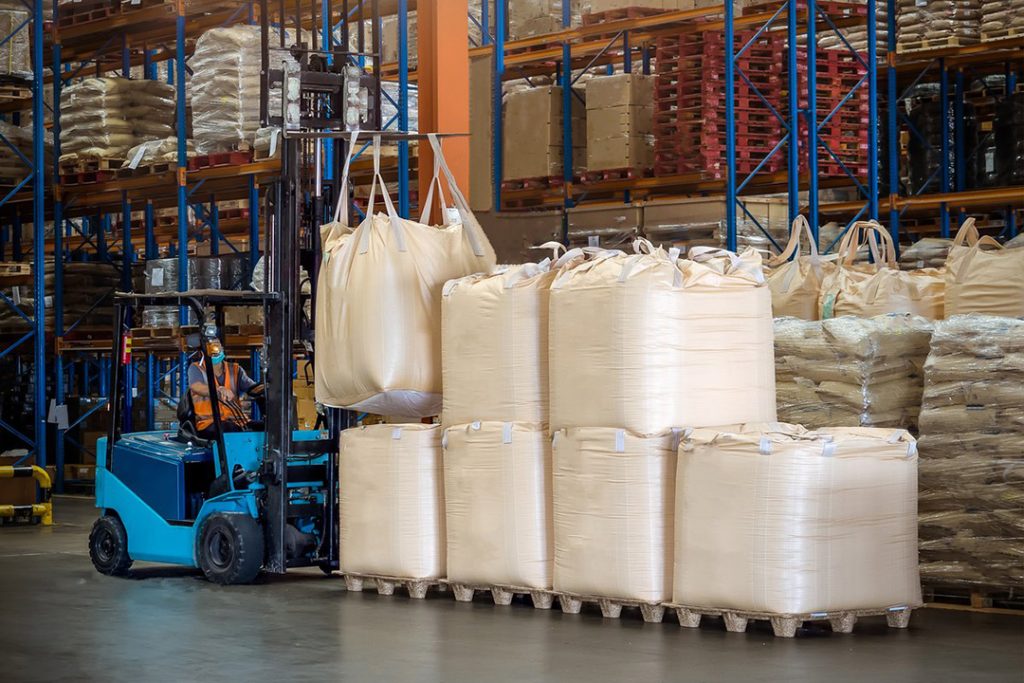
When being transported on a flatbed truck or stacked in a warehouse, a bag with a shifted centre of gravity is more likely to slump or topple. This poses a serious risk to the safety of warehouse workers and forklift operators.
2. Overcoming blow-outs and obstacles – If the top spout of the liner is not precisely centred with the filling spout of the bag, the product will strike the plastic at an angle rather than flow straight to the bottom.
The danger is that this leads to unequal pressure and air pockets. Extreme circumstances may result in the plastic tearing or blowing out, contaminating the outer bag or resulting in a complete loss of goods due to the force of high-speed filling against a misaligned liner.
3. The discharge stranglehold – This is perhaps the most annoying outcome of misalignment. A choke point may form at the discharge spout if the liner is twisted. The risk is that the product becomes stuck when it is time to empty the bag.
To release the contents, workers may have to manually shake or cut the bag, which is risky and results in product waste. Additionally, the liner spout may not extend through the discharge aperture at all if it is tucked too far into the bag, which would prevent a clean pour.
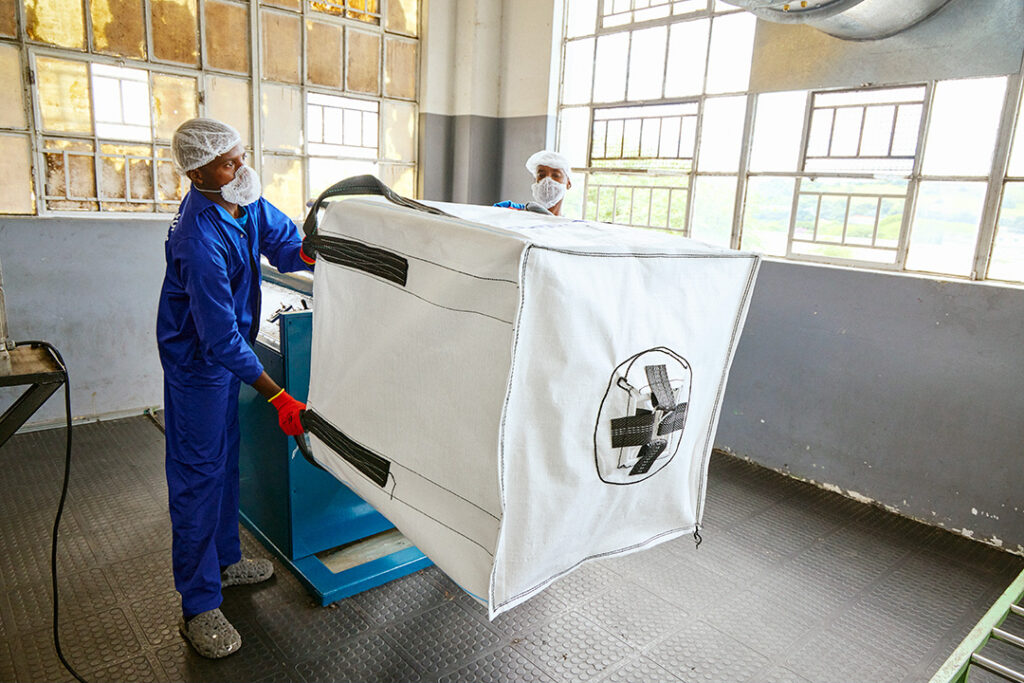
Checklist: How to ensure your liners are aligned correctly
You can save thousands of Rands in lost time and damaged inventory by making sure your liners are seated properly. Before filling your next batch, follow this checklist:
- Visual inspection prior to filling – Examine the top spout of the bag before hooking it to the filling station. The liner should show up as a smooth tube that extends toward the base. If you notice a spiral pattern or a lot of folds, the liner is probably twisted.
- The test for air inflation – An inflator or “pre-puff” feature is often found in many filling machines. Before introducing the product, blow the lining open with air. Verify that the liner expands uniformly to each of the four corners. A properly positioned liner should hug the outer bag’s walls, leaving no gaps or noticeable creases.
- Extension and alignment of the spout – Examine the bag’s bottom. The liner should be folded back or fastened in accordance with the bag’s design after passing through the discharge spout. Open the discharge spout. The liner spout is misplaced if you can’t see it or if it feels tight and is dragged to one side.
- Check the glued or tabbed points – If you’re using high-end bags, the liners might be glued or tabbed. The liner is physically fastened to the outer fabric at these locations to stop it from moving. Make sure every tab is still in place. The liner will probably slip down during filling if a tab has snapped, causing the previously stated bunched base problems.
How CBB addresses the misalignment problem
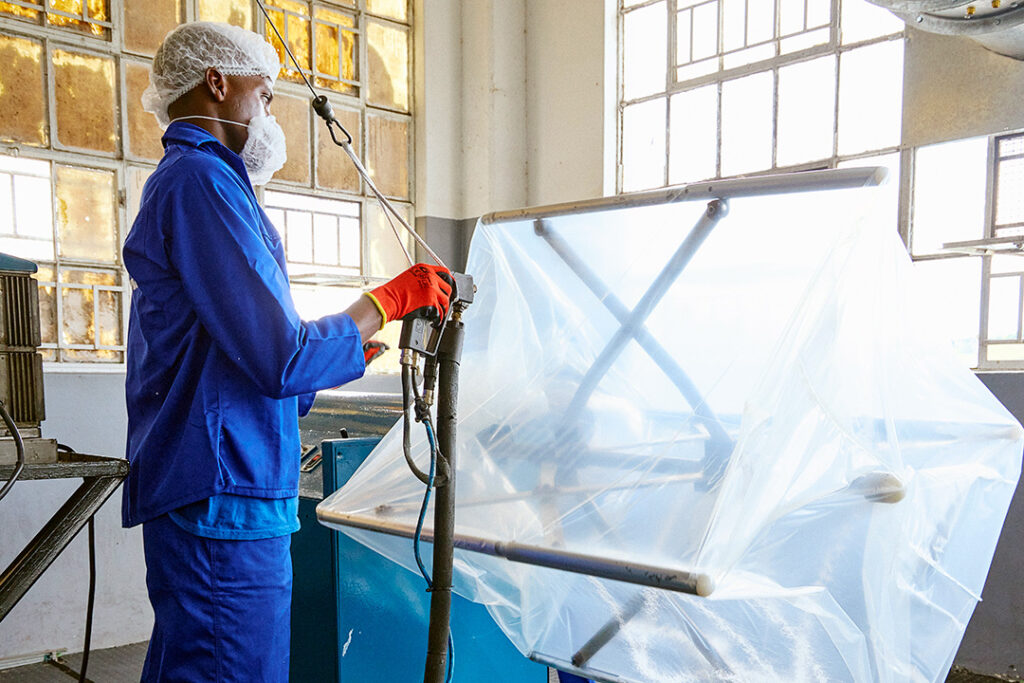
CBB offers carefully engineered packaging solutions. We have complete control over the assembly process, including the fitment of inner liners. Our local production enables strict quality control, in contrast to imported bags, where you have no influence over the assembly line. Whether it’s a straightforward lay-flat or an intricate form-fit liner, we guarantee that every liner is placed and aligned by knowledgeable specialists using specialised tools.
We can customise the liner to meet your unique requirements:
- Form-fit liners – These are made to precisely fit the bag’s contour, including the spouts, which naturally lowers the possibility of misalignment.
- Tabbed liners – By sewing the liner into the bag’s seams at key locations, we can guarantee that it stays perfectly seated even during bumpy transport or high-velocity filling.
- Food-grade cleanrooms – Our liners are placed in sanitary settings to guarantee that the bag is uncontaminated during alignment.
By partnering with CBB, you support a local business in addition to receiving a superior product. We can supply your bespoke, precisely aligned bulk bags exactly when you need them because of our local operations, which also results in reduced lead times.
Like any system, a bulk bag can fail due to a single misplaced component. You can protect your employees and your goods by paying attention to inner liner alignment. Please contact us today for more information about our FIBCs or for advice on any of our products.
___
Custom Bulk Bags is a major South African manufacturer of woven polypropylene bags for various industries, including mining, chemicals and agriculture. We are a Level 2 B-BBEE supplier that falls under the ownership structure of Deneb Investments Limited. For more information on our products, contact sales@custombulkbags.co.za.
