
The waste and recycling sector in South Africa is under tremendous pressure to handle the country’s expanding urban and industrial waste streams. Stronger compliance and recycling programs are expected to propel the sector’s valuation into the multi-billion Rand level as the rate of residential waste output continues to rise annually.
While municipal trucks and skips are traditionally used for large-scale waste management, flexible, scalable solutions are needed to address the widespread issues of litter, illegal dumping, and community waste clean-up campaigns.
Here, local cleanup efforts are being revolutionised by bulk bags, also called flexible intermediate bulk containers (FIBCs). These flexible, high-capacity containers are turning out to be the perfect solution for community clean-up projects, providing an easy, practical, and affordable method of collecting substantial amounts of trash and litter.
Custom Bulk Bags (CBB) produces 3.5 million bags a year – all of which can safely hold between 500kg and 2000kg each. Our products can be tailored with various optional extras to suit your specific needs, whether you’re a waste management service or a community leader organising clean-up initiatives in your neighbourhood.

The role of bulk bags in community clean-up campaigns
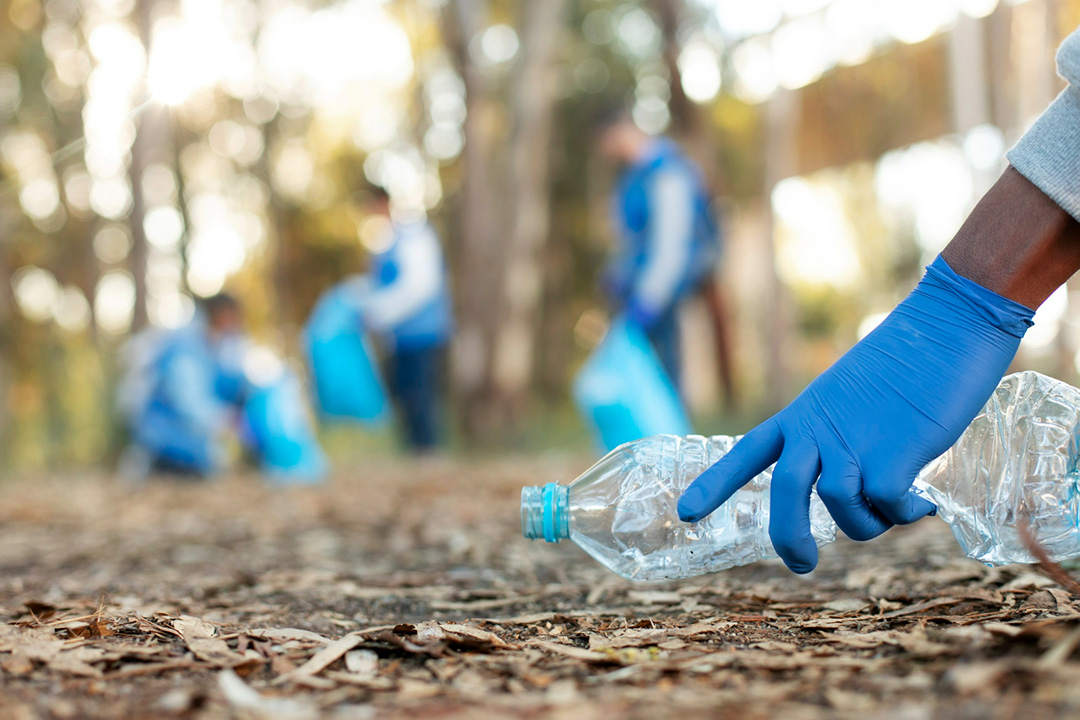
Whether they are run by corporate volunteer groups, NGOs, or local residents, community clean-up programmes often struggle with effective waste collection and containment. Volunteers use little plastic bags that are prone to tearing or filling too quickly. They also need to be handled carefully to prevent spills or mishaps.
For these community projects, bulk bags provide a logistical breakthrough. They can be used as a mobile, high-volume receptacle. A bakkie or a small flatbed truck can easily accommodate a bulk bag or two. Once in place, the bags offer a large, strong, and convenient container for all types of trash and litter that volunteers pick up.
On average, one tonne, or around 1.5 cubic meters, of waste can be stored in a typical FIBC. By combining the collected garbage into manageable, forklift-ready units, this lowers the quantity of small bin liners required.
Alternatively, volunteers can gather trash in smaller bin bags, which they then toss into the main bulk bag container. This speeds up the process of gathering materials and guarantees that they are all placed into safe containers that are prepared for transportation.
After the bulk bag is full, its strong lifting loops enable it to be securely lifted by a crane or forklift and transported straight to a landfill or recycling facility without the need for hand offloading, saving labour costs and time.

Ideal FIBC designs for waste collection
The materials that make up litter and general garbage are diverse; they might be organic, moist, sharp, and often smelly. To guarantee safety, containment, and cleanliness, bulk bags used for this purpose need to have certain design elements:
1. Inner liners to stop liquid seepage – Wet organic items, abandoned liquid containers, and ambient moisture are often present in litter. This liquid may permeate the woven polypropylene fabric if it is not protected, leading to hygiene concerns – contamination and germs can spread when liquid drips from the bag during handling and transportation.
In addition to adding needless weight to the bag, liquid seepage can make handling more difficult. It is necessary to specify an internal polyethylene liner. By acting as a waterproof seal and stopping liquid seepage, this liner keeps the outside woven cloth clean and dry.
2. Strengthened seams – Broken glass, scrap metal, splintered wood, and jagged plastic are examples of abrasive and sharp things that are frequently found in waste materials, especially those gathered during illegal dumping clean-ups.
The bag’s woven fabric may be punctured or torn by these sharp edges, especially at stress points like the base and seams. The solution is to specify stronger seams and a thicker fabric GSM (grammes per square metre), which adds an additional layer of protection, increasing the bag’s resistance to punctures and preserving its structural integrity.
3. Top and bottom closures that are sealable – For compliance and public approval, it is essential to contain smells and keep collected rubbish from escaping during transport. Secure closing tops and bottoms are important. To keep litter from being blown away by the wind while being transported, a duffle top with an inbuilt knot or rope that can be tightened shut is perfect. A standard closed, or plain bottom (without a discharge spout) is also ideal.
4. UV-stabilised fabric – The fabric needs to be shielded from sun damage because cleanup efforts often take place over several days, and bags may be left in open spaces while waste is being collected. The bag’s longevity is improved with UV-stabilised fabric, which keeps the material from deteriorating in sunlight.

Working together to make South Africa cleaner
Waste management is a municipal and industrial problem in South Africa. CBB gives citizens and organisations the tools they need to safely and successfully clean up their surroundings. Being a top local producer of FIBCs, CBB is well-positioned to satisfy the various demands of waste management firms and community organisations by providing customised hygiene solutions through bulk bags, high-volume local supply and sturdy designs
Our dedication to producing high-quality, long-lasting FIBCs ensures that garbage handlers and community organisations have a product they can depend on to properly handle bulky, sharp, and disagreeable objects in waste streams. Please contact us today for more information about our FIBCs or to get a free consultation.
___
Custom Bulk Bags is a major South African manufacturer of woven polypropylene bags for various industries, including mining, chemicals and agriculture. We are a Level 2 B-BBEE supplier that falls under the ownership structure of Deneb Investments Limited. For more information on our products, contact sales@custombulkbags.co.za.
