
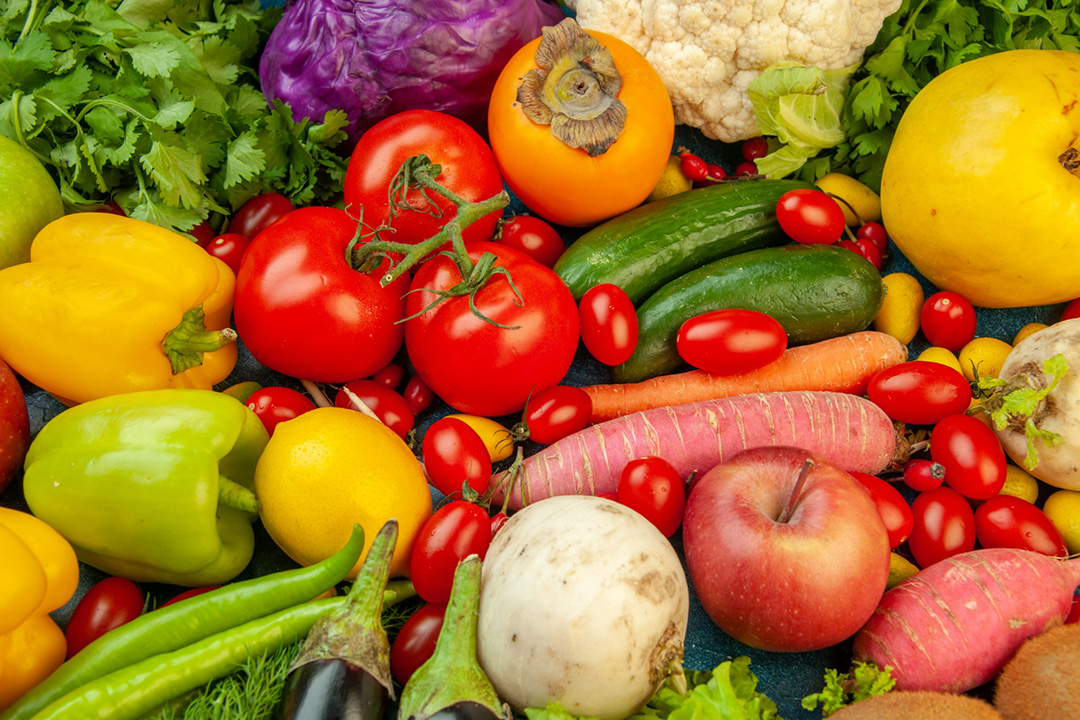
For commercial food manufacturers and agricultural processors, packaging plays a critical role in consumer safety. Standard industrial packaging is not appropriate for large quantities of raw ingredients such as flour, sugar, spices, grains or agricultural produce. This is where food-grade bulk bags must be used.
What is the difference between a food-grade bulk bag and a regular bulk bag? Most people think it’s just a case of taking a normal bag and giving it a quick wipe-down before filling it. Actually, “food-grade” is a heavily audited and regulated designation, detailing every step in the manufacturing process from the raw polymer to the final stitch.
Custom Bulk Bags (CBB) is a leading local manufacturer and supplier of customised FIBCs for various businesses in South Africa. We produce 3.5 million bulk bags annually for food-related businesses across the region. Our food-grade bulk bags are built to these exacting standards, keeping your food products secure all the way through the supply chain.
The stringent standards of food-grade certification
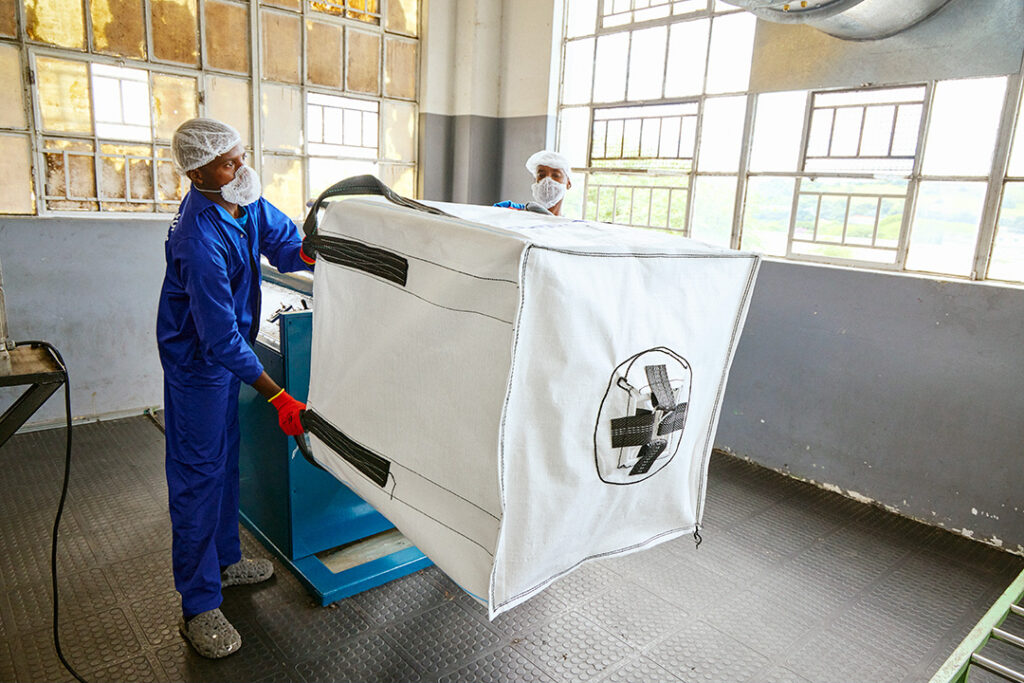
A bulk bag must be produced under conditions that eliminate the risk of chemical, physical or biological contamination to be classed as food-grade. The classification is based on several non-negotiable manufacturing standards:
1. 100% virgin polypropylene resin – Cost controls often require the use of recycled polypropylene in bulk bags. This is a big no-no for food-grade bags. Food-grade bulk bags must be manufactured from 100% virgin polymer resins only, approved by international regulatory bodies (such as the FDA or EU compliance frameworks). Virgin resin means there is no risk of chemical migration or trace contaminants leaching out of the bag fabric into your food products.
2. Facilities certified to GFSI benchmarked and BRCGS – The difference between a regular bag and a food-grade bag is the environment it is made in. True food-grade bulk bags are manufactured in separate, highly controlled cleanroom environments that are certified to standards recognised by the Global Food Safety Initiative (GFSI) and, most notably, BRCGS (Brand Reputation through Compliance Global Standards).
The certified cleanrooms follow stringent protocols:
- Advanced air filtration: Positive pressure and HEPA-filtered ventilation systems prevent dust and airborne contaminants from settling on the fabric.
- Strict pest control: Multi-layered, audited pest control systems ensure the facility is completely free of insects or rodents.
- Ultrasonic cutting: Instead of using the standard hot knives to cut the edges of the fabric, ultrasonic technology is used to melt the edges together, eliminating loose threads or fraying that could end up in the food.
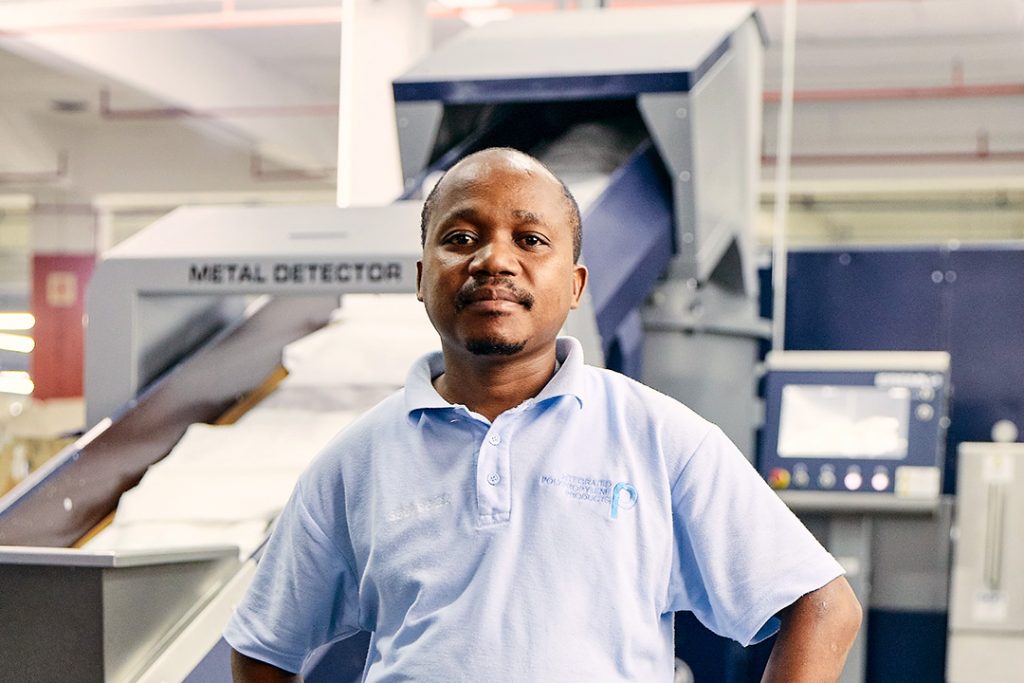
- Metal detection and light table inspection: Every finished bag is passed over specialised light tables for visual inspection and through metal detectors to make sure no broken sewing needle fragments or foreign particles get caught in the seams.
- Strict personnel hygiene: The cleanroom staff wear full protective suits, hairnets and gloves and the whole operation is operated on an audited HACCP (Hazard Analysis Critical Control Point) programme.
Why South Africa needs specialised packaging
Volumes in the food processing and agricultural export sectors in South Africa have reached new heights. The use of certified food-grade packaging is an operational imperative as local regulations tighten and international trade pressures mount.
A single contamination incident can trigger catastrophic product withdrawals, crippling financial penalties and long-term damage to a brand’s reputation. Whether you are transporting milled maize, refined sugar or baking ingredients, food-grade bulk bags guarantee the batch is free from industrial oils, loose fibres or foreign dust particles.
Many bulk food ingredients can be heavily affected by environmental factors. Powdered products, starches and fine sugars are highly hygroscopic, meaning they absorb moisture from the air, which leads to clumping, spoilage or microbial growth.
The problem is solved with food-grade bags with special inner liners like LDPE food-safe or multi-layer barrier foil liners. These liners keep the product separate from ambient humidity, oxygen and light, thus keeping the product fresh and increasing the shelf life during long-term storage or transit through humid coastal ports like Durban.
Your local food-grade packaging partner
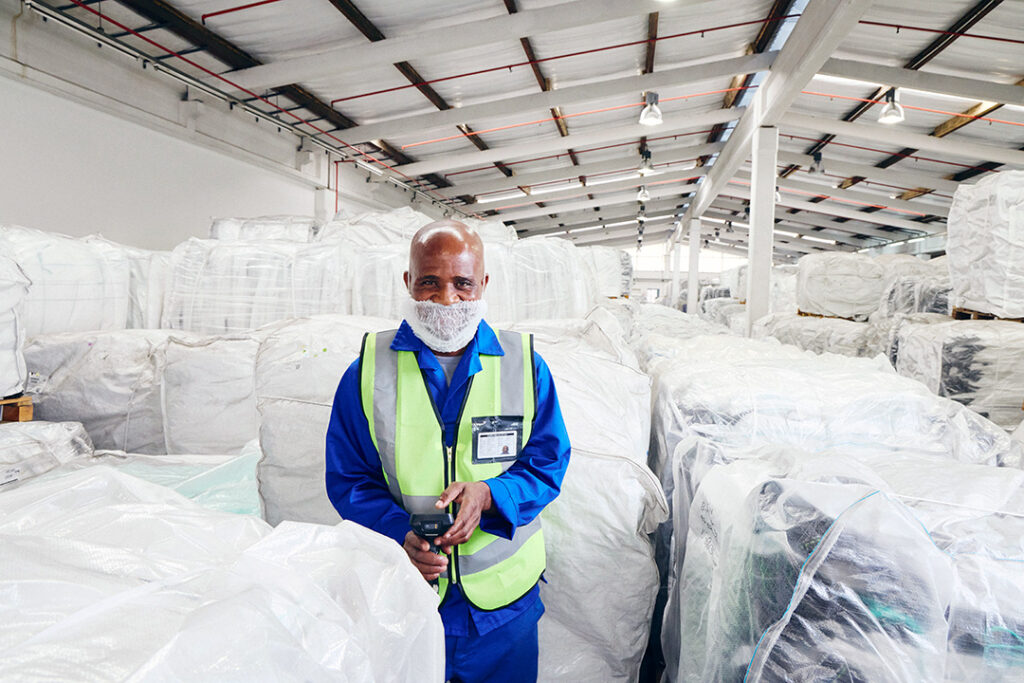
South African businesses that depend on overseas importers for certified packaging are subject to worldwide shipping delays, port congestion and exchange rate fluctuations. CBB is a strong local alternative as we offer local manufacturing to high standards. We can guarantee timeous delivery of food-grade bulk bags.
Our cutting-edge production facilities in South Africa allow us to design food-grade bulk bags that are precisely matched to your food handling equipment. We are able to create custom designs to maximise efficiency, capacity and hygiene.
By working with CBB, you can get reasonable local prices, prompt delivery that fits your production schedules, and knowledgeable, practical guidance from a team that is well-versed in the South African food business. Please contact us today for more information about our food-grade bulk bags.
___
Custom Bulk Bags is a major South African manufacturer of woven polypropylene bags for various industries, including mining, chemicals and agriculture. We are a Level 2 B-BBEE supplier that falls under the ownership structure of Deneb Investments Limited. For more information on our products, contact sales@custombulkbags.co.za.
