
Polypropylene is a versatile and highly adaptable material for packaging, which is why it’s our preferred material for our bulk bags (or FIBCs). It offers a special blend of remarkable strength and lightweight flexibility, making it the best option for constructing packaging that is strong, resistant to chemicals, and able to handle the stresses of storage and transportation.
The quality of polypropylene used directly affects the durability and strength of the finished bulk bag. Custom Bulk Bags (CBB) is a reputable manufacturer and supplier of FIBCs in South Africa. We produce 3.5 million bulk bags a year – all of which can safely hold between 500kg and 2000kg each.

The path from monomer to pelletised polypropylene
Polypropylene is a series, or chain, of propylene molecules. It is produced through polymerisation, where propylene gas molecules are linked together using a catalyst under controlled conditions. It’s a complicated process that produces plastic pellets. A change to any of the conditions or catalysts can have various effects on the properties of the pellets.
The catalyst used is usually a metal compound, which helps to convert the gas into long molecular chains. The unreacted gas molecules are separated and recycled. Changing the temperature, pressure or type of catalyst can affect the stiffness, impact resistance, and melt flow rate of the polypropylene pellets. For example:
- Temperature – higher temperatures result in a decreased molecular weight, which can impact the material’s strength and flexibility.
- Pressure – The reactor’s internal pressure aids in regulating the polymer’s density and rate of reaction.
- Catalysing conditions – The chemistry of the polymer chains, which determines the material’s strength and melting point, is determined by the type and quantity of catalyst utilised.

The new material is chilled or ‘quenched’ to prevent the polymer from expanding further and to preserve its characteristics. A number of procedures are then followed to convert the material into the final, usable pellet form. These are essential for guaranteeing the calibre and uniformity of the polypropylene used to create bulk bags:
- Recycling and separation – The polymer is removed from unreacted propylene monomer gas and any byproducts. To reduce waste and boost efficiency, these unreacted components are recycled back into the process.
- Drying – Since too much water can degrade the quality of the finished product, the separated polymer is completely dried to eliminate any traces of moisture.
- Extrusion – To create continuous strands of polypropylene, the dry polymer is placed into an extruder, where it melts and is forced through a die to create long ‘noodles’.
- Cooling – To solidify the molten strands, they are quickly cooled in a water bath.
- Pelletising – Once the threads are cool, they are cut up into pellets. This is the best way to handle and ship polypropylene.
- Colouring and additives – At this point, the pellets are mixed with a variety of colouring agents and additives. These additions can improve the qualities, such as antistatic compounds to make handling particular materials safer or UV stabilisation to stop deterioration from sunlight.

Where CBB and IPP come in
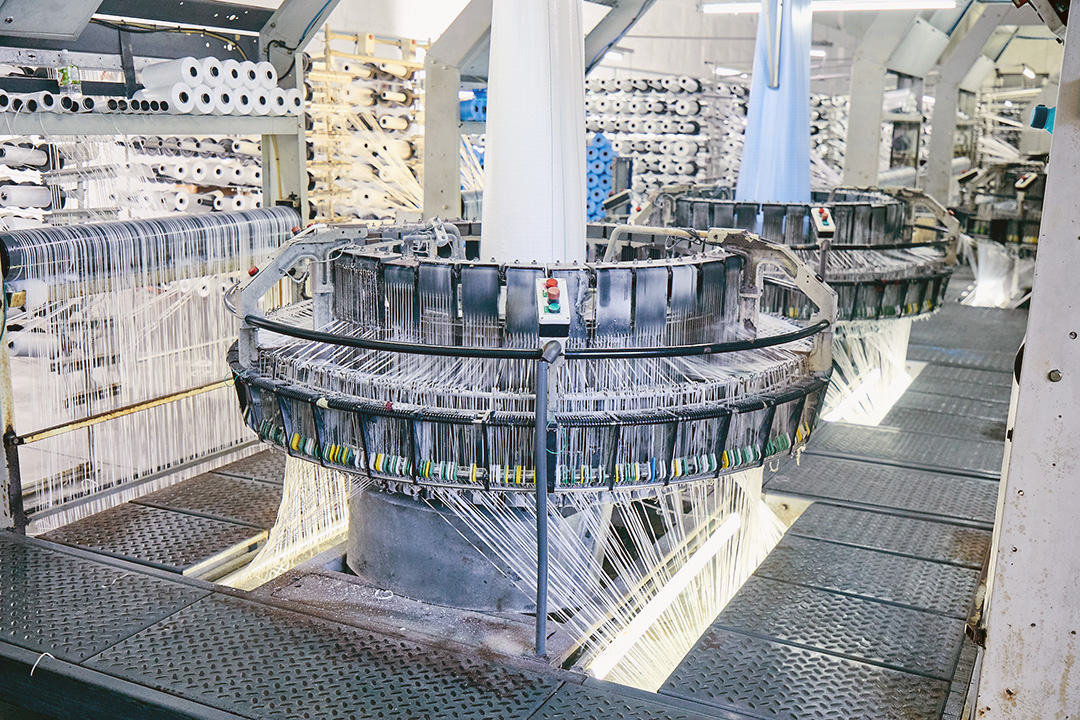
CBB works together with our sister company, Integrated Polypropylene Products (IPP), to manufacture our bulk bags. IPP receives high-quality polypropylene pellets and turns them into long tapes for the bulk bag fabric. These tapes are woven together to create a light but strong fabric that serves as the basis for our bulk bags.
To melt the polymer and extrude it into thin, flat tapes, the pellets are fed into specialised machinery. The remarkable tensile strength of these tapes is derived from stretching them to align the polymer molecules.
The durable fabric that serves as the body of each bulk bag we manufacture is then created by winding the tapes onto large bobbins and weaving them together on looms. This meticulous procedure is what gives greater strength and dependability to our bulk bags, enabling them to securely and reliably transport heavy loads.

The Custom Bulk Bags promise
Our dedication to excellence begins with the raw material. Our bulk bags are strong and dependable because we use premium polypropylene and maintain control over the manufacturing process, from obtaining the pellets to weaving the finished fabric. We are proud to be able to offer top-notch FIBCs that satisfy the strictest safety and performance requirements to South African enterprises.
From the smallest particle to the largest bulk bag, CBB is a partner that recognises the value of quality, and we will make sure your products are safeguarded at every stage of their journey. Please contact us today for more information about our FIBCs or to get a free consultation.
___
Custom Bulk Bags is a major South African manufacturer of woven polypropylene bags for various industries, including mining, chemicals and agriculture. We are a Level 2 B-BBEE supplier that falls under the ownership structure of Deneb Investments Limited. For more information on our products, contact sales@custombulkbags.co.za.
