
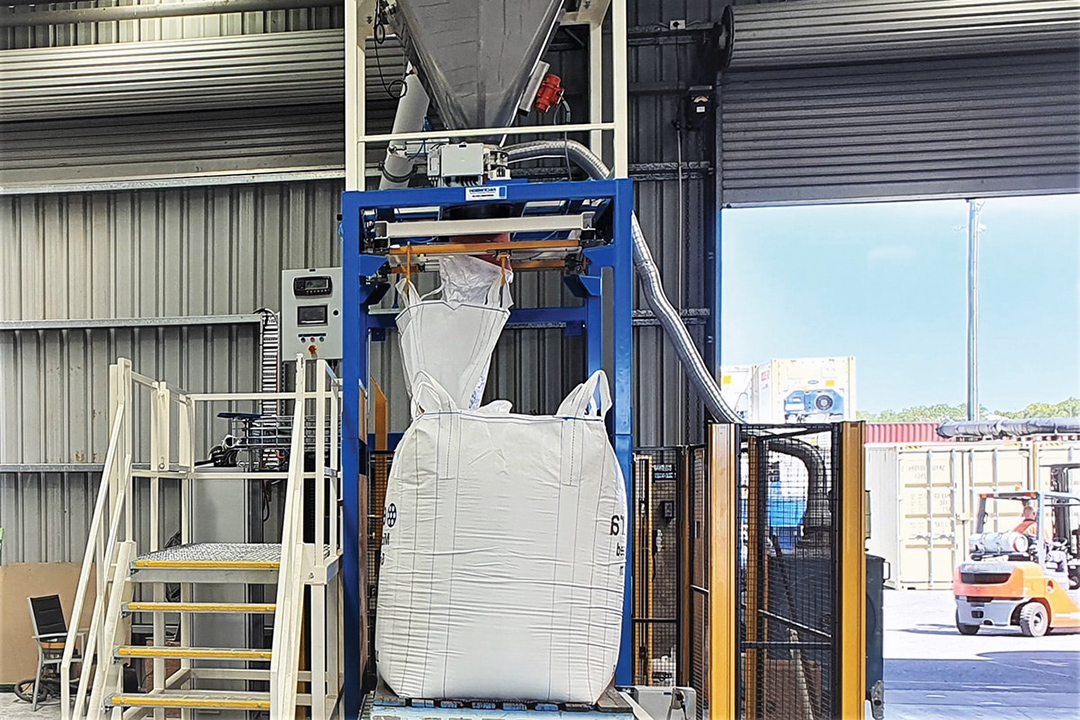
Many businesses and industries use bulk bags, also called flexible intermediate bulk containers (FIBCs), to store and transport various materials. The benefits of these lightweight, durable and highly flexible containers are well-understood by industry stakeholders. Inner liners are a common optional extra that improve the protection of certain materials, such as powdered chemicals, foods and pharmaceuticals.
However, fitting your FIBCs with inner liners can make them more difficult to unload. Usually, a full-bottom discharge or a spout are used to unload a bulk bag, but when a solid polyethylene or foil liner is fitted inside the bag, it makes these discharge features harder to use. The liner can also include a discharge spout, but it needs to be packed properly before being filled.
Custom Bulk Bags (CBB) is a manufacturer and supplier of bulk bags in South Africa. We produce 3.5 million bags a year – all of which can safely hold between 500kg and 2000kg each. Our products are highly flexible, durable and customisable, with various inner liners and discharge options.

Unload your FIBCs with inner liners
Before we get to the unloading problem, we first need to explain the key types of inner liners and their uses. There are, essentially, four types of inner liners. These include form-fit, tubular, baffle and conductive liners. These may be made from polyethylene, foil or some other flexible and protective material.
A form-fit liner is designed to perfectly fit the shape of the bulk bag. A tubular liner, on the other hand, is a simple tube inserted into the bag for added protection. A baffle liner helps to maintain the cubic shape of the bulk bags and is used to improve stability. Lastly, a conductive liner is necessary in static environments, where sparks or static discharges can cause explosions or combustion.
All four types of inner liner improve protection against moisture, contamination, spillage/leakage and make it easier to handle powdery or fine-grained substances. They are often a requirement for compliance in the food and chemical industries, so fitting them to FIBCs is compulsory.

How to discharge a FIBC with an inner liner
The inner liner can make it more difficult for companies to unload the contents of the bag. It requires handlers to use specialised machinery and techniques to prevent waste, spillage and possible hazards.
1. Prepare the bag for unloading – Before discharging the contents, the bulk bag must first be inspected for signs of visible damage, punctures or leaks. It must then be verified that it is compatible with the discharge equipment, like hoppers and spouts. If you’re dealing with conductive materials, ensure the bag is properly grounded.
2. Positioning the FIBC – Use a forklift or hoist to lift the bag by its loops or tunnel sleeves. Secure the bag on the discharge equipment or frame, and ensure that it hangs freely. If the discharge spout on the inner liner was packed properly, it should not have any kinks or obstructions.
3. Open the discharge spout – Untie or unfasten the protective flap that covers the bottom of the discharge spout. Be careful when doing this, as the contents of the bag could dump suddenly. Some bags fitted with inner liners have a separate tie or seal, so unfasten these too.
4. Managing the inner liner – Use a liner tensioning system or manual force to keep the liner spout upright and taught throughout the unloading process. Ensure the spouts are properly aligned with the hopper or spout receptacle. Monitor the discharge carefully and use a control valve if necessary.
5. Completing the process – Once the bulk bag is empty, inspect the inner liner for any residue or wasted materials. If you need to dispose of a damaged liner, do so in accordance with recycling or waste best practices. Fold the empty FIBC and store it for reuse at a later stage.

Recommended equipment for unloading FIBCs with inner liners
If you’re using bulk bags with liners, we recommend using certain equipment. Firstly, a bulk bag discharger or frame is essential as it holds the FIBC in shape during the unloading process. A hopper is also useful for preventing airborne particles and minimising dust during discharge.
Pneumatic vibrators can be purchased to improve the flow of powdery goods or sticky materials, which prevents wastage and leftover materials in the bags. Consider using an iris valve to control the flow rate more precisely during unloading. Lastly, a spout sealer is a great piece of equipment for preventing contamination or spillage.
These tools can improve efficiency and product transfer, which has a direct impact on a company’s bottom line. If you’re looking for customisable bulk bags that can be ordered with inner liners, then CBB is your local manufacturer and supplier. Please contact us today for more information about our FIBCs or to get a free consultation.
___
Custom Bulk Bags is a major South African manufacturer of woven polypropylene bags for various industries, including mining, chemicals and agriculture. We are a Level 2 B-BBEE supplier that falls under the ownership structure of Deneb Investments Limited. For more information on our products, contact sales@custombulkbags.co.za.
