
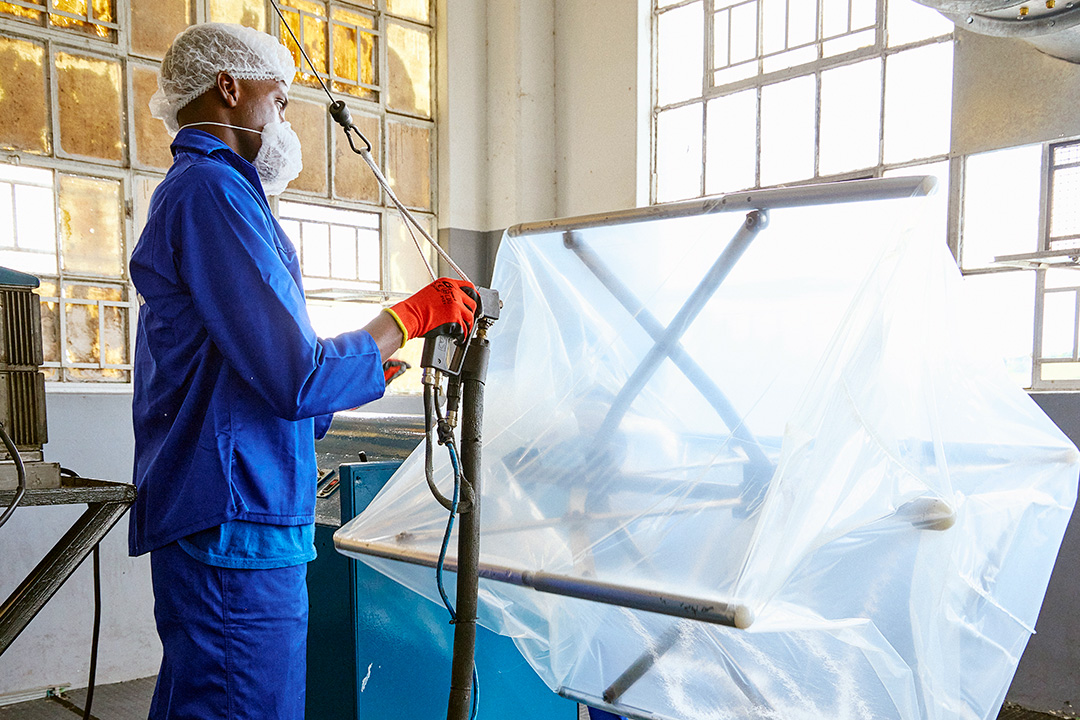
Maintaining the integrity of your products and raw materials during storage and transport is absolutely critical. The typical woven polypropylene fabric of a flexible intermediate bulk container (FIBC) is usually adequate, but it doesn’t offer complete protection for delicate materials, moisture-sensitive chemicals or fine powders. Inner liners are needed to protect these types of materials.
During the packaging design process, one of the most important choices to make is between a lay-flat liner and a form-fit liner. This decision has an impact on your operational costs as well as filling efficiency and moisture protection.
Custom Bulk Bags (CBB) is a leading local manufacturer and supplier of customised FIBCs. We produce 3.5 million bulk bags annually. We extrude and weave our own premium polypropylene fabric and manufacture our inner liners in-house. This makes our bulk bags an affordable and versatile packaging solution for many industries.
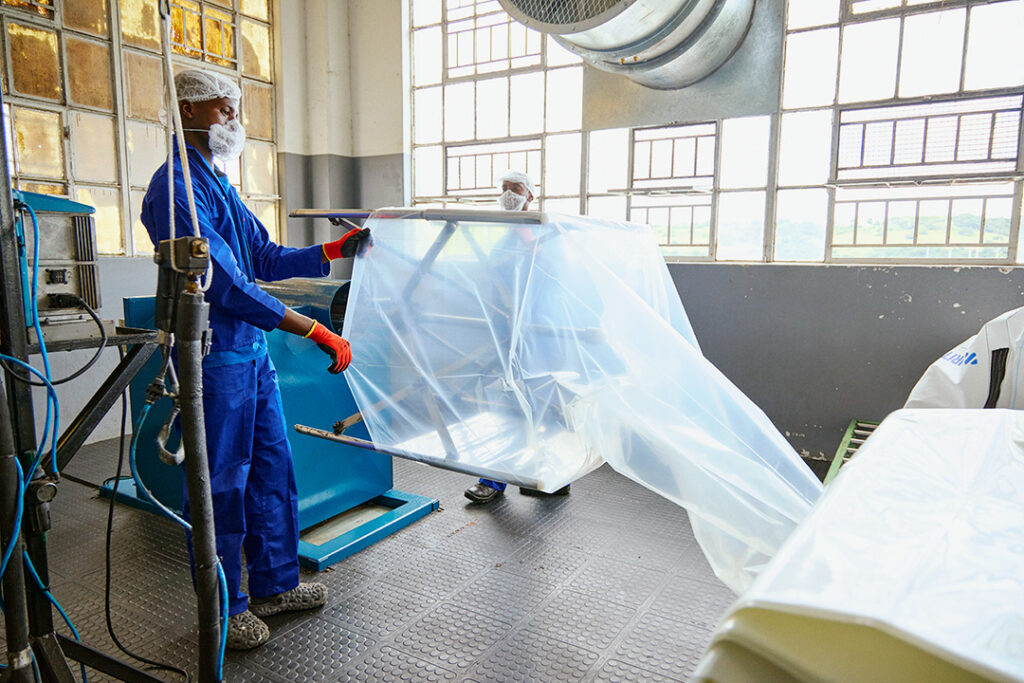
Why use inner liners for your bulk bags?
FIBCs are made from woven tapes of polypropylene. This weave is naturally permeable, despite its extreme strength. Without a liner, the contents of the bag could be compromised by moisture or oxygen seeping in and small powders sifting through the weave.
The main advantages of liners are their ability to act as moisture and oxygen barriers, which are crucial for materials that clump when wet or oxidise when exposed to air. The food and pharmaceutical industries depend on hygienic containment to avoid environmental contamination.
The main users of lined FIBCs in South Africa are the food and beverage industry (sugar, flour, spices), the chemical and pharmaceutical manufacturing industry (fine powders, active components), and the mining industry (high-value mineral concentrates).
Difference between lay-flat and form-fit liners
Based on their shape and construction, liners typically fall into one of two groups, per industry standards and specialised guidelines on FIBC liner types.
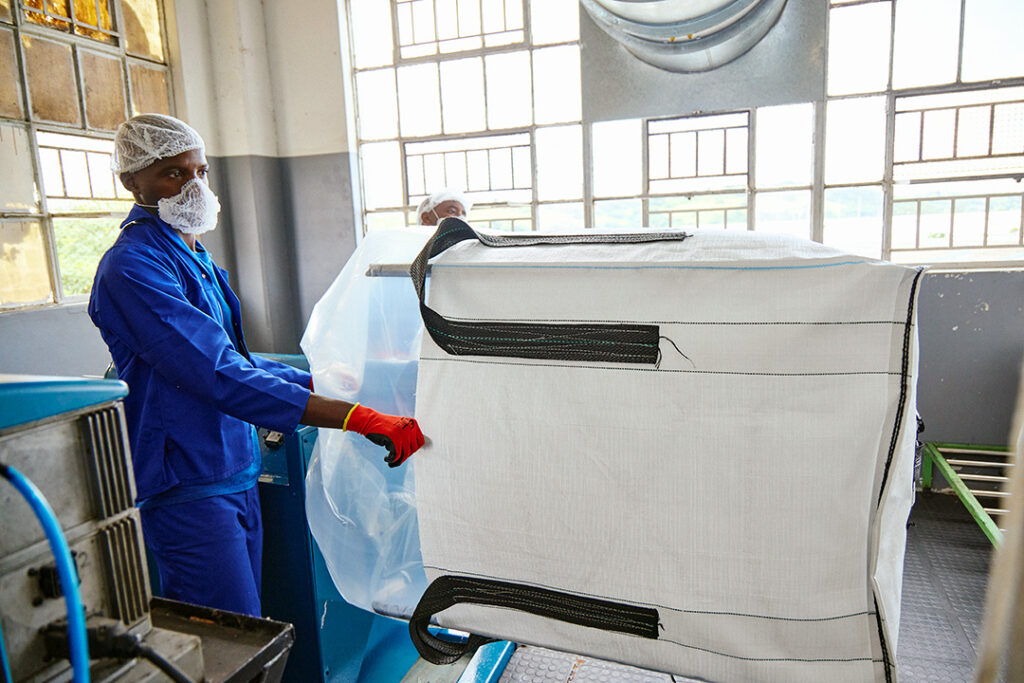
1. Lay-flat liners – The most popular and affordable option is lay-flat liners. They are produced as a single, continuous, cylindrical tube that are normally heat-sealed at the bottom and open at the top.
When not in use, they lie flat, as the name implies. Since their diameter is typically more than that of the bulk bag in which they are inserted, the liner can expand and “hug” the bag’s walls as it fills.
These liners are inexpensive and simple to make. They offer a great foundational defence against dampness and sifting. However, they tend to wrinkle and fold at the bottom of FIBCs, so they can trap small amounts of product during discharge, leading to waste.
2. Form-fit liners – Form-fit liners are designed to precisely fit the top and bottom spouts as well as the internal dimensions of the FIBC. The cubic shape of the bag is replicated in the manufacturing of these liners. They don’t move and don’t have the extra material that makes creases and folds.
Their exceptional filling and discharge efficiency is one of their main advantages. They guarantee that 100% of the product is released and are perfect for high-speed automated filling lines because they don’t have pleats or folds. In addition, they offer improved stack stability. However, the intricate manufacturing process required to shape the plastic to match the bag’s size makes these liners more expensive.
How do you know which is the best choice for your needs? If you handle basic commodities, fill bags by hand, or are on a tight budget where a small bit of product retention is acceptable, go for lay-flat liners. If you use automated filling machines, have a high-value product (such as speciality chemicals), or need a completely clean discharge (typical in food-grade applications), go with form-fit liners.
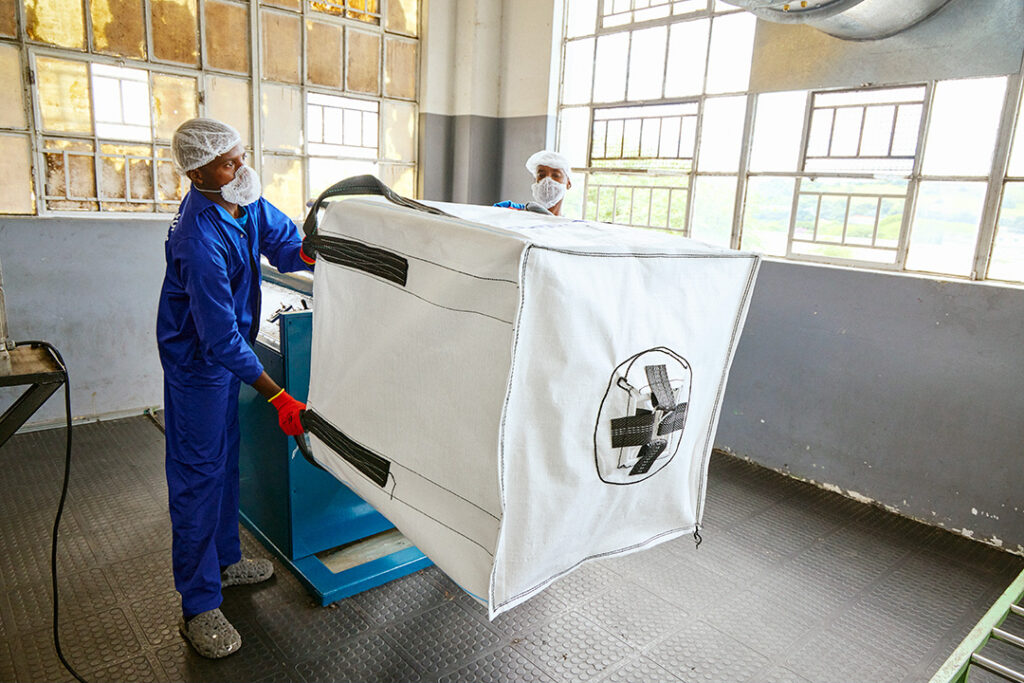
Choosing the proper liner composition
The level of protection is determined by the material; the shape of the liner is just half the fight. CBB provides a variety of material choices based on your product’s chemical and physical characteristics.
- Linear low-density polyethylene (LLDPE) – This is the industry norm. It provides good transparency and is incredibly flexible and resilient. It is the preferred method for sift-proofing and overall moisture protection.
- High-density polyethylene (HDPE) – HDPE is more “crinkly” and thinner than LLDPE. It has superior temperature resistance and a significantly higher moisture barrier. Products that are filled at higher temperatures often need this type of liner.
- Polypropylene (PP) – Commonly used for hot-fill applications. In situations where polyethylene may soften or fail, a PP liner will preserve the structural integrity of your product if it is packaged while still hot from the production line.
- Ethylene vinyl alcohol (EVOH) – This is an excellent oxygen barrier. Usually, multi-layer co-extruded liners use EVOH. It is the best option for food items that need to be flushed with nitrogen or that need to retain their freshness by retaining fragrances and preventing oxygen from entering.
- Aluminium foil – Foil liners offer the best protection. They are almost impervious to oxygen, light, and moisture. These are used for the most delicate chemicals or premium compounds and are nearly always form-fit.
- Multilayer co-extruded liners – These liners sandwich several materials together. A co-extruded liner may consist of an outer layer for strength, an inner layer of food-grade PE, and a middle layer of EVOH for gas protection. In South African export markets, this “best of all worlds” strategy is becoming more and more popular.
Your local source for tailored FIBCs
The South African industry cannot be served by a one-size-fits-all strategy. Your packaging must be as distinctive as your product, whether you are delivering processed sugar from KwaZulu-Natal or mining ore from the Northern Cape.
CBB has a clear advantage as a local manufacturer and regional supplier. We design packaging solutions that are tailored to your specific needs. Our manufacturing facilities are set up to produce form-fit and lay-flat liners that are precisely suited to the material composition and micron thickness needed for your cargo.
Choosing between a lay-flat liner and a form-fit liner can be the difference between a damaged shipment and a happy customer. Although lay-flat liners are a cost-effective option, high-performance sectors often find that the accuracy and effectiveness of form-fit liners make the investment worthwhile.
Our technical staff can offer free consultations and advice on which liner is best for your application. We are prepared to assist you in creating a bulk packaging solution that strikes a balance between price, security, and the best product protection. Please contact us today for more information about our FIBCs.
___
Custom Bulk Bags is a major South African manufacturer of woven polypropylene bags for various industries, including mining, chemicals and agriculture. We are a Level 2 B-BBEE supplier that falls under the ownership structure of Deneb Investments Limited. For more information on our products, contact sales@custombulkbags.co.za.
