
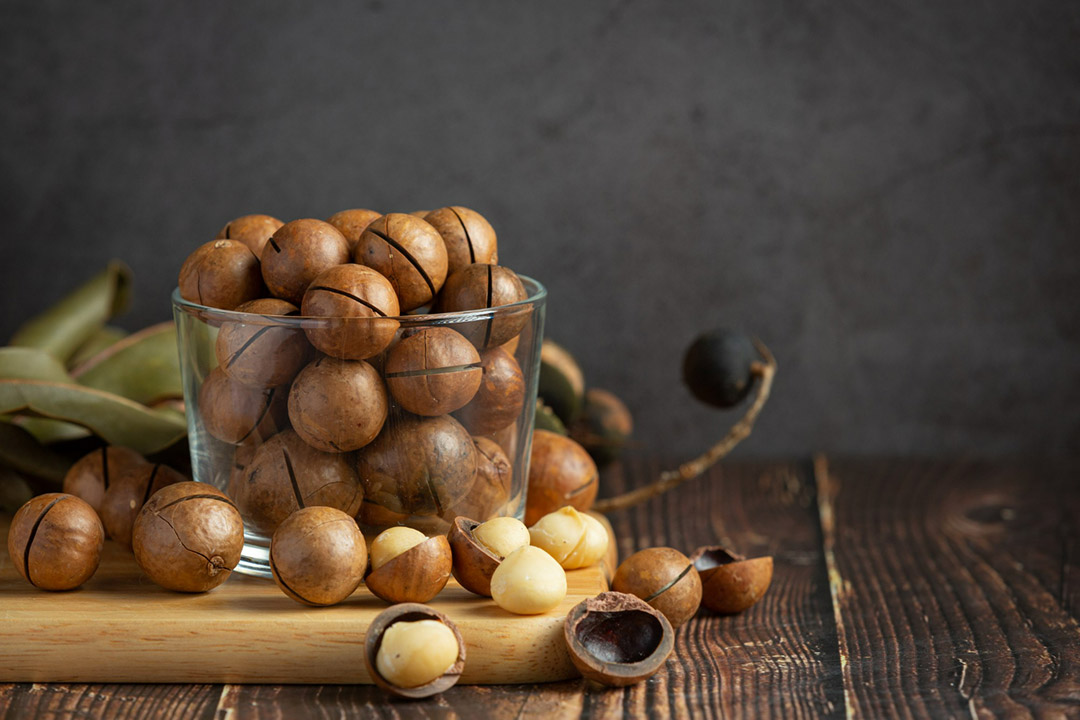
Macadamia nuts have recently become a high-demand source of protein around the world, and South Africa has solidified its position as the world’s top producer and exporter of these nuts. The industry makes a substantial contribution to GDP and is an essential part of the country’s agricultural output.
The 2025 crop is expected to reach over 93,500 metric tonnes (in-shell basis), which means that affordable and durable packaging products are needed for logistics as the macadamia industry continues on its robust growth trajectory. Up to 98% of South African macadamias are shipped to international markets, such as the EU, North America, and Southeast Asia.
As a result, maintaining profitability and market supremacy requires optimising each step of the supply chain, starting with packaging. Custom Bulk Bags (CBB) is a reputable manufacturer and supplier of FIBCs in South Africa. We produce 3.5 million bulk bags a year – all of which can safely hold between 500kg and 2000kg each. Our products are used by macadamia farmers to store and transport the nuts around the world.

Simplifying macadamia exports with FIBCs
Whether they are in-shell or kernel form, macadamia nuts are high-density, high-value goods that require careful handling. The scale and accuracy needed for worldwide nut trading make FIBCs ideal.
They provide unmatched volume consolidation, to start. Up to two tonnes of material can be safely stored in standard bulk bags, eliminating the need for dozens of smaller sacks. From the farm trailer to the processing facility and onto the harbour, this enormous carrying capacity directly results in a decrease in the quantity of units handled, significantly reducing work time and expenses at each transfer point.
Secondly, bulk bags are the ideal size for freight in the current world. They can be packed neatly and effectively within trucks and regular shipping containers thanks to their nearly cubical design, which maximises container utilisation. Exporters can drastically reduce their freight costs per kilogramme by continuously optimising the payload within each container, which will increase the final product’s competitiveness in global markets.
Lastly, FIBCs make handling easier. These bags have sturdy four cross-corner lifting loops that allow forklifts and cranes to handle them quickly and safely. By lowering the possibility of human error and product damage, this automated handling makes loading trucks and ships easier, quicker, and more effective.

Ideal design specifications for macadamia FIBCs
There is no one-size-fits-all set of design requirements for macadamia bulk bags; instead, it’s better to design bulk bags for each stage of the product – starting with nut-in-shell (NIS) and ending with finished macadamia kernel.
1. On-farm drying and storage packaging (NIS) – When macadamia nuts-in-shell are collected, they can contain up to 30% moisture. The main goal of the first stage of on-farm drying and short-term storage is to quickly remove moisture to minimise the formation of mould and avoid a flaw called “brown centres.”
Large ventilated FIBCs are the best design solutions for this stage. The air-drying procedure required to reduce the moisture content to the transport-safe level of about 10% is made easier by these porous designs, which maximise air circulation around the nuts. High-grade, UV-stabilised polypropylene is also needed as the FIBCs are often stored in semi-open sheds where sunlight could hit the bags for hours throughout the day.

2. Export-grade kernel packaging – After processing the macadamia kernels, the difficulty changes from removing moisture to protecting the barrier. Due to their high oil content (up to 80%), macadamia nuts are extremely vulnerable to rancidity when exposed to moisture, light, and air. It is necessary to use a high-barrier packaging technique to maintain the lengthy shelf life needed for international export.
FIBCs with a high-barrier inner liner are the best design at this stage. The gold standard is a liner made of polymer films sandwiched by an aluminium foil layer. The foil creates an outstanding barrier against the passage of oxygen and moisture.
The liner needs to work with the Modified Atmosphere Packaging (MAP) method, which involves vacuum-sealing the bag and frequently flushing it with inert gas (such as carbon dioxide or nitrogen) to lower any remaining oxygen levels to less than 2%. By doing this, oxidation is avoided and the kernel’s superior flavour and crispy texture are preserved throughout the supply chain.
Q-bags, also known as baffle bags, are strongly advised here. When the bag is filled, interior fabric panels called baffles keep it square. This design means the bag won’t bulge, increasing the surface area that can be neatly stacked inside shipping containers and increasing container utilisation by 15% to 20%.

Choosing the best supplier of bulk bags
Working with a reliable and capable FIBC supplier is essential to ensuring the quality of an export crop worth millions of rand. You should focus on fundamental capabilities and not just pricing when searching for the best manufacturer in South Africa.
Look for a supplier with on-site quality control facilities. This guarantees that the bags will function well under the strain of high loads and export handling by ensuring thorough testing of the fabric’s tensile strength, UV resistance, and loop integrity.
To satisfy particular export specifications for macadamia kernels, your chosen manufacturer should provide complete customisation, including baffle bags, unique filling or discharge spouts, and a range of high-barrier foil liners.
Choose a supplier whose bulk bags meet international safety and packaging standards, including those established by the ISO, HACCP, and international food safety guidelines. Their expertise in providing bags for export markets guarantees adherence to a variety of legal specifications.
Lastly, look for a local manufacturer who can meet the demand for your entire crop through production. They can provide the most competitive pricing and ensure a reliable supply of bulk bags. Importing FIBCs often comes with shipping delays and hidden costs, including taxes and customs duties. Please contact us today for more information about our FIBCs or to get a free consultation.
___
Custom Bulk Bags is a major South African manufacturer of woven polypropylene bags for various industries, including mining, chemicals and agriculture. We are a Level 2 B-BBEE supplier that falls under the ownership structure of Deneb Investments Limited. For more information on our products, contact sales@custombulkbags.co.za.
