
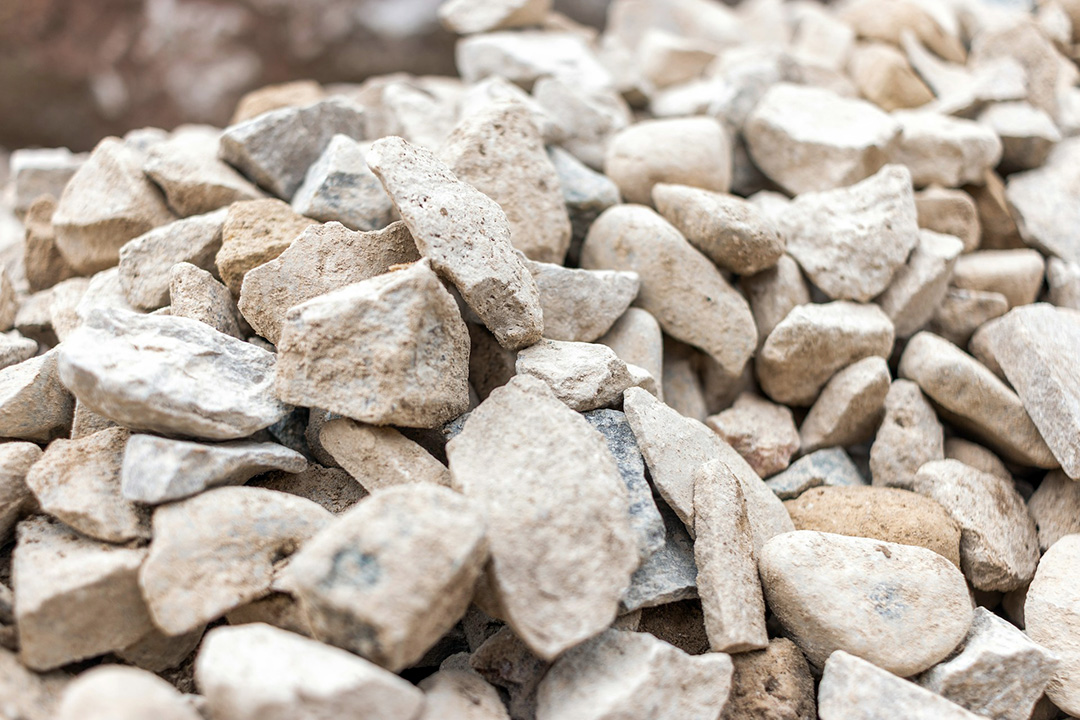
The mining and construction industries in South Africa are closely linked, and limestone is at the centre of this relationship. The limestone industry acts as a pillar supporting the nation’s infrastructure, even though high-profile commodities like gold, platinum, and iron ore usually make national headlines.
The South African limestone market is expected to increase at a compound annual growth rate (CAGR) of 5.7% in the upcoming years. In general, the mining sector makes up about 6% of South Africa’s nominal GDP. Within this framework, the yearly sales value of industrial minerals, primarily limestone and lime, exceeds R27 billion.
The building sector, which depends on limestone for almost 70% of total consumption, is most impacted by this economic performance. It is a key ingredient in concrete powder, the main feedstock for Portland cement, and a necessary aggregate for road bases. At the same time, processed limestone powder (calcium carbonate) is used by the larger mining and metallurgical industries for acid mine drainage neutralisation, flue-gas desulfurisation, and as a fluxing agent in steel production.
One of the biggest logistical challenges is moving finely ground limestone powder from quarrying sites to local building depots and industrial processing facilities. Bulk bags, also known as flexible intermediate bulk containers (FIBCs), are an ideal packaging tool in this situation. Custom Bulk Bags (CBB) can produce up to 3.5 million bulk bags annually for mineral processors in South Africa and neighbouring countries.
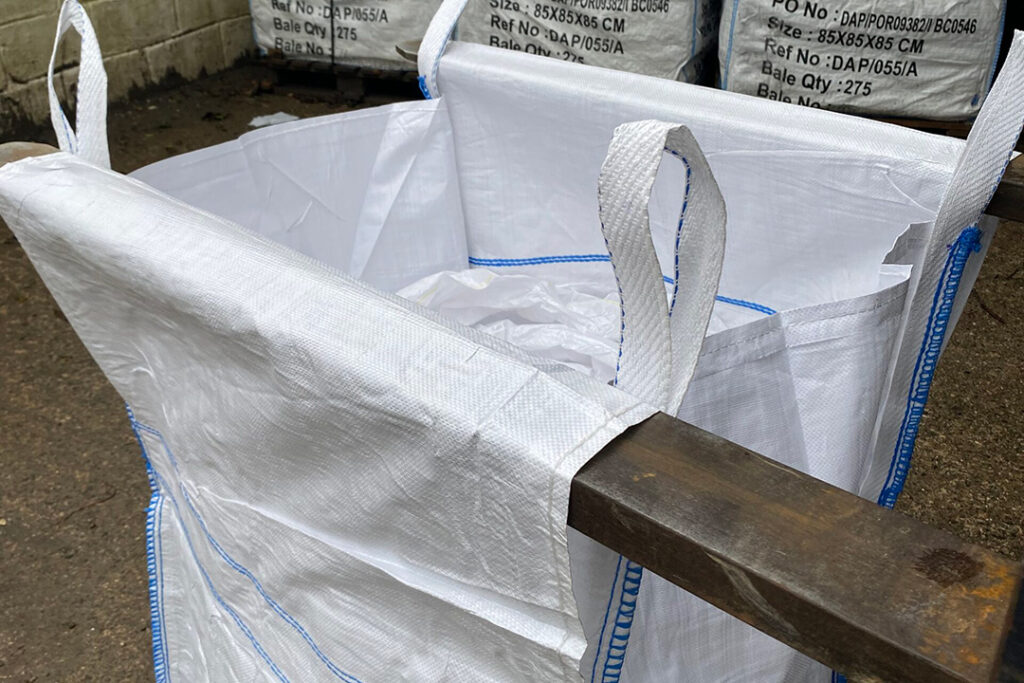
Limestone powder storage and transportation
The physical characteristics of limestone are changed when it is crushed and ground into a fine powder. It becomes extremely sensitive to ambient moisture, highly flowable, and susceptible to airborne dusting. Transporting limestone powder in conventional, low-quality packaging or open-bed tipper trucks always results in substantial product loss and violations of environmental regulations.
This high-risk procedure is turned into a clean, closed-loop logistical operation by using specially designed bulk bags. Mines and limestone distributors can combine up to two tonnes of fine powder into a single, incredibly manageable bag that is simple to stack, track, and move.
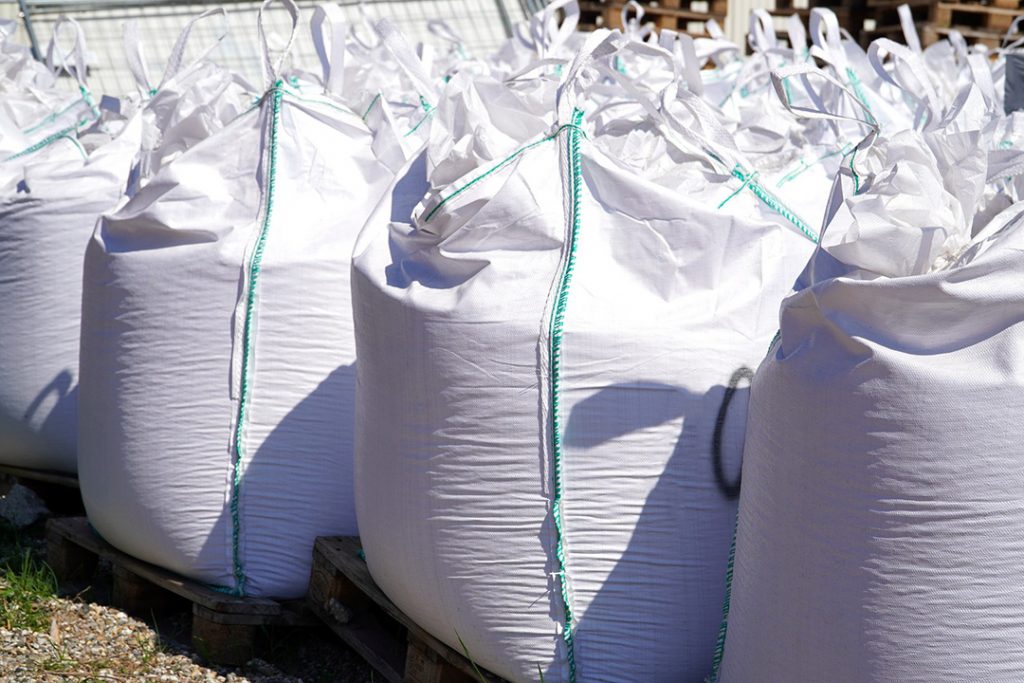
To effectively transport and store limestone powder, the bulk bag’s design must incorporate several essential, customised features:
- Strong fabric and structural strength – Due to its density, limestone powder exerts pressure on the container as it is being transported. Bulk bags must be made of heavyweight woven polypropylene fabric, usually between 180 and 220 GSM (grammes per square metre), to avoid tearing or structural deformation. A Safe Working Load (SWL) of 1000kg to 2000kg with a 5:1 or 6:1 safety factor guarantees that the bags can endure the rigours of flatbed transportation, multi-tier warehouse stacking, and forklift movement.
- Triple sift-proof seams to prevent dusting – Limestone powder is basically microfine particles, so it can readily escape through the tiny holes on woven fabric bulk bags and the seams. This sifting results in product loss during travel and dangerous airborne dust clouds. These bulk bags need to have sift-proof seams. This method entails sewing thick yarn filler cords or specialised felt strips straight into the seams, totally blocking the needle holes, and firmly sealing the powder inside.
- Polythene (PE) liners for moisture management – Due to its high hygroscopicity, limestone powder absorbs moisture from the surrounding air. The powder will cake, clump, and partially harden in the presence of ambient humidity, coastal air, or rain, making it unsuitable for use in automated industrial spreaders or the production of cement. An airtight and watertight barrier is needed, so FIBCs should be fitted with an inner PE liner.
- Customised discharge and filling spouts – Bulk bags should have specially designed top filling spouts and bottom discharge spouts to control dusting during loading and unloading. These spouts prevent spillage, protect employees from dust, and increase plant throughput by connecting directly to the automated hopper and auger systems of the plant.
South Africa’s reliable local industrial packaging partner
Operational delays result in lost revenue in the mining and construction supply chains. If you decide to import bulk bags from foreign suppliers, you put your business at risk of lengthy port backlogs, international shipping delays, and fluctuating exchange rates.
CBB offers world-class FIBCs, made right here in South Africa. We maintain complete quality control over every structural component of our bags by weaving our own heavy-duty textiles and extruding our own polypropylene tapes in-house.
Our professional sales consultants offer free guidance and advice on custom-tailored spout designs and loop combinations to match your precise machinery layouts. Please contact us today to chat with our sales team about customised FIBCs for storing and transporting limestone powder.
___
Custom Bulk Bags is a major South African manufacturer of woven polypropylene bags for various industries, including mining, chemicals and agriculture. We are a Level 1 B-BBEE supplier that falls under the ownership structure of Deneb Investments Limited. For more information on our products, contact sales@custombulkbags.co.za.
