
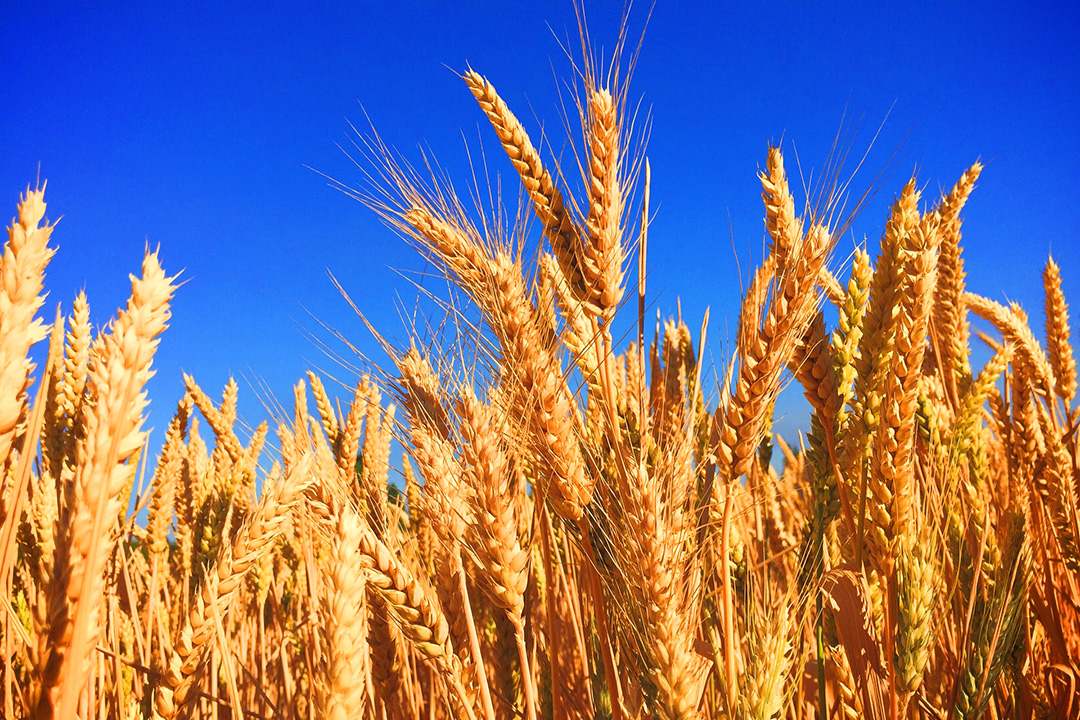
This year has seen both record-breaking achievements and challenging economic conditions in South Africa’s agricultural sector. Recent data, which was made public by the Crop Estimates Committee (CEC) in late April 2026, indicates that the just-finished winter wheat harvest in South Africa produced about 1.93 million tonnes.
The winter wheat growing season is nearing its peak. Farmers in major wheat-producing regions, including the Free State, the Northern Cape, and the Western Cape’s Swartland, are currently finalising their fields, with a total of 486 400 hectares planned for planting during the 2026–2027 production cycle.
Winter is the time when SA’s bread supply is laid. When harvest time comes and the lengthy growing season is over, farmers must fight to keep the harvested grain bone-dry. Wheat avidly collects moisture from its surroundings due to its high hygroscopicity. The financial repercussions are severe if harvested wheat is exposed to rain, moisture, or damp air.
In addition to causing early sprouting and localised heating, excessive moisture serves as a breeding ground for Aspergillus moulds and harmful mycotoxins. In an instant, a crop that may have fetched high prices for bread-milling grade can be reduced to low-value animal feed.
In order to avoid this, South African grain producers can use flexible intermediate bulk containers (FIBCs), also referred to as bulk bags, as their post-harvest containment method. Custom Bulk Bags (CBB) is a leading local manufacturer and supplier of customised FIBCs for farmers and agricultural businesses in South Africa. We produce 3.5 million bulk bags annually for farmers across the region. Our bulk bags can be completely tailored to match your needs, without unnecessary costs and import delays.

The best ways to store wheat in bulk bags
Even though bulk bags are quite durable, there are a few specific on-farm storage guidelines that must be followed when storing a delicate living organism like grain:
- The “12% moisture rule” states that wheat with an internal moisture content of more than 12% should never be placed in a sealed bulk bag. When moist grain is packed, the core sweats, which accelerates spoiling.
- Use polythene (PE) inner liners for optimal moisture protection. During transportation to silos, this liner entirely isolates the wheat from external humidity and moisture by acting as an airtight, waterproof barrier.
- Keep bags off the floor, as concrete or soil floors can cause moisture to draw up into the bulk bags. To allow air to flow below FIBCS, always store filled grain bulk bags on dry, clean wooden or plastic pallets.
- Improve warehouse ventilation by opening doors, windows and installing air louvres in the roof. Grain respiration is accelerated by heat accumulation in storage sheds.

The advantages of FIBCs
Your farm will experience immediate logistical efficiency when you switch from traditional loose tipping or heavy 50kg sacks to a bulk bag system. South African farmers can unlock several unique benefits by working with CBB.
Firstly, we offer actual affordability. Your packing cost per kilogram is significantly reduced when you combine your wheat into 1-ton or 2-ton bulk bags. Your on-farm labour costs are greatly reduced because you are handling one large container mechanically, instead of forty tiny sacks by hand.
CBB also guarantees on-time delivery when it counts the most. In agriculture, a 48-hour delay might be the difference between a successful delivery and a crop that is damaged. Purchasing your packaging from foreign importers exposes you to exchange rate fluctuations and shipping port delays. CBB has top-notch manufacturing facilities in Durban, which enables us to provide dependable, timely delivery to your farm gate and quick production turnaround times.
Lastly, we offer expert service and superior quality. A one-size-fits-all strategy is not something we support. The technical staff at CBB offers expert guidance to assess your existing forklift and grain hopper configurations. We alter fabric weights, discharge spouts, and loop designs to guarantee your bags function perfectly. What’s more, our bags are constructed with high-quality UV stabilisers woven into the fabric to keep the packaging from cracking or becoming brittle in the harsh South African sun.

Customised bulk bags designed for South African farming
Custom Bulk Bags is a proudly local manufacturer and supplier of agricultural FIBCs. We ensure a level of structural integrity that is simply unmatched by imported goods since we have complete control over the production process, from extruding our own raw polypropylene tape to weaving the finished heavy-duty cloth.
CBB can create heavy-duty, sift-proof, laminated bulk bags to keep your winter wheat totally dry and contaminant-free. By working with CBB, you are directly promoting industrial jobs and economic progress in South Africa while making an investment in superior agricultural confinement. Please contact us today for more information about our FIBCs or for advice on long-term storage with our products.
___
Custom Bulk Bags is a major South African manufacturer of woven polypropylene bags for various industries, including mining, chemicals and agriculture. We are a Level 2 B-BBEE supplier that falls under the ownership structure of Deneb Investments Limited. For more information on our products, contact sales@custombulkbags.co.za.
